Uzbek cuisine is hearty, generous and naturally halal-friendly. From plov to tandoor somsa, these are the dishes to try and the places to find them.
Finding halal food in Uzbekistan is easy. It is a Muslim-majority country, and traditional Uzbek cooking is built on lamb, beef, rice, vegetables and bread. Some restaurants serve alcohol and a few international places offer pork, so if certification matters to you, ask us and we will point you to places we trust.
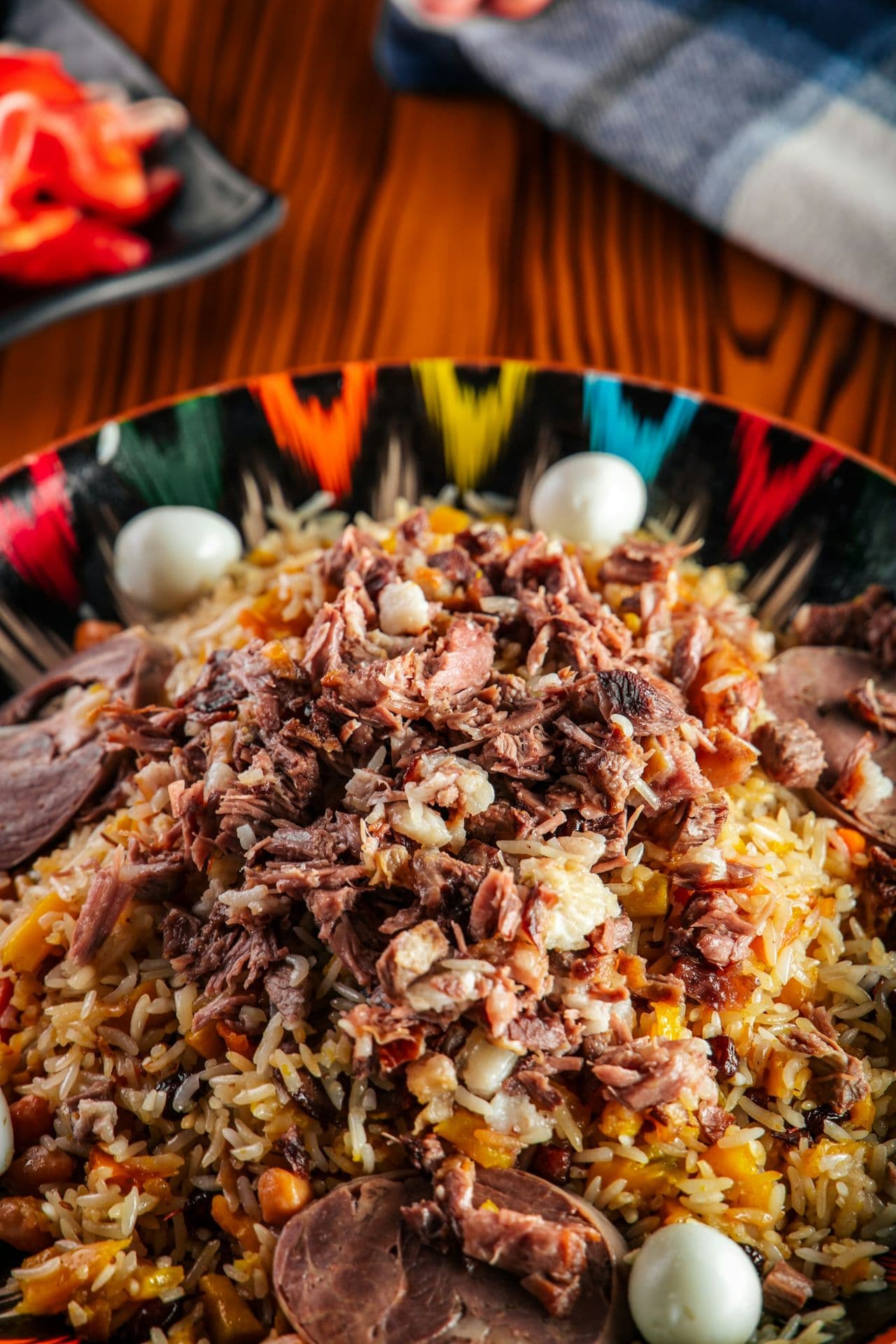
Plov: the national dish
Plov is rice slow-cooked in a large cauldron with lamb or beef, carrots, onions and spices, often with chickpeas and raisins. Uzbek plov culture is recognised by UNESCO as intangible cultural heritage. It is traditionally a lunchtime dish: in Tashkent, the large plov centres serve it from late morning until the cauldrons are empty, so go early.
Other dishes worth trying
- Somsa — flaky pastries filled with meat and onion, baked against the walls of a clay tandoor.
- Shashlik — skewers of lamb or beef grilled over charcoal, served with raw onion and bread.
- Lagman — hand-pulled noodles in a rich meat and vegetable sauce.
- Manti — large steamed dumplings, often served with yoghurt.
- Shurpa — a clear, comforting lamb and vegetable soup.
- Non — round, stamped bread; every region bakes its own style.
Where to eat
Bazaars are the best place to taste everyday food: the Chorsu Bazaar in Tashkent and the Siab Bazaar in Samarkand are full of bread, dried fruit, nuts and fresh somsa. For a sit-down meal, a traditional choyxona (teahouse) serves plov, shashlik and endless pots of green tea. Your guide knows which places are popular with local families, which is usually the best recommendation of all.
A few tips
- Bread is treated with respect: it is never placed upside down or thrown away.
- Green tea is offered with almost every meal, and refusing a refill is perfectly polite.
- Portions are generous; sharing several dishes is the local way to eat.